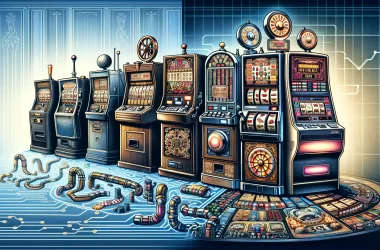
Think about your favorite movie. Now, imagine it was released in another country with no changes—the jokes, the settings, the cultural references all stay exactly the same. It would probably fall flat, right? Well, the same principle applies to slot games. A slot that’s a smash hit in one market can be a complete dud in another if it doesn’t speak the local language, both literally and culturally.
Here’s the deal: game developers aren’t just translating text anymore. They’re performing a kind of cultural alchemy, transforming themes, symbols, and even gameplay mechanics to resonate with players from Tokyo to Toronto. Let’s dive into how this fascinating process works.
Why a One-Size-Fits-All Slot Strategy Fails
Honestly, it’s about connection. A player in Germany has different historical touchstones, lucky symbols, and entertainment preferences than a player in Mexico. It’s not just about avoiding offense—though that’s crucial—it’s about creating a genuine spark of recognition and enjoyment.
Global slot game adaptation, then, is a tightrope walk. Developers must balance a core, fun game engine with a layer of cultural customization that feels authentic, not tacked-on. Get it right, and you build loyalty. Get it wrong, and you’re invisible.
The Key Levers of Cultural Customization
1. Theme & Narrative: The Heart of the Story
This is the most visible layer. A theme is the slot’s skin, its first impression.
- Asia: Themes heavily feature prosperity, fortune, and mythology. Dragons, phoenixes, and gods like the Monkey King are perennial favorites. The number 8 is woven in everywhere for luck. You’ll see slots based on local festivals, like Lunar New Year, not just Western holidays.
- Europe: Preferences can be surprisingly regional. Nordic players often gravitate toward mythology (Norse gods, Vikings) and dark fantasy. In the UK, there’s a strong affinity for nostalgia—think classic fruit machines, pub culture, or TV game shows.
- Latin America: Vibrant celebrations like Día de los Muertos, local folklore creatures, and iconic historical figures or revolutionaries often take center stage. The aesthetic is usually bold, colorful, and full of life.
2. Symbols & Aesthetics: The Language of Imagery
A symbol is never just a symbol. A four-leaf clover means luck in the West, but in Asia, it’s a bamboo plant or a specific Chinese character. Using the wrong animal or color can send an unintended message.
For instance, while red is lucky in China, it can be associated with danger or debt elsewhere. A wise owl symbolizes knowledge in many cultures, but in some, it’s a bad omen. Game artists have to become amateur cultural anthropologists, honestly.
3. Gameplay Mechanics & Math: The Feel of the Game
This is the subtle, under-the-hood stuff that players feel but might not see. Risk tolerance and engagement styles vary.
In some Asian markets, players enjoy games with a high level of interaction and decision-making—like bonus rounds with skill-based elements. They might also prefer games with a “turbo spin” feature for a faster pace.
Volatility is another huge factor. Some regions have players who prefer steady, smaller wins (low volatility), while others chase the thrill of the massive, rare jackpot (high volatility). The math model behind the scenes is tuned accordingly.
Real-World Examples: What Adaptation Looks Like
| Base Game Concept | Adaptation for Western Europe | Adaptation for Southeast Asia |
| An adventure slot exploring ancient ruins. | Theme might focus on Celtic druids or Roman conquests. Symbols: swords, shields, goblets. | Theme shifts to lost temples in jungles. Symbols: jade carvings, temple bells, lotus flowers. May include a “collect the relic” bonus. |
| A slot game based on a “wealth” theme. | Leprechauns and pots of gold, or perhaps a Wall Street tycoon theme. | God of Wealth (Caishen) is central. Gold ingots, koi fish, and peonies dominate. Red and gold color scheme is mandatory. |
You see? It’s a complete reskin, a reimagining. It goes way beyond swapping out a flag or translating “Spin” to “Girar.”
The Pitfalls and Challenges of Getting It Right
Sure, it sounds straightforward. But cultural adaptation is a minefield. A seemingly cool theme can accidentally tap into a historical sore spot. Using a sacred religious figure as a cartoonish slot symbol? That’s a fast track to backlash and bans.
And then there’s the law. Regulatory frameworks dictate everything from allowed bet limits and mandatory display of RTP (Return to Player) to which symbols or themes are outright prohibited. In some markets, you can’t show coins spilling from a slot machine—it has to be abstracted. Developers need local legal teams, not just local artists.
The Future: Hyper-Localization and Beyond
The trend is moving beyond broad regions to hyper-localization. Think a slot game tailored specifically for players in Japan’s Kansai region versus Kanto, with local dialects and mascots. Or using AI to analyze local player data and suggest micro-adjustments to bonus frequency.
Another emerging frontier is the integration of local payment methods and social features. A slot game in India might integrate local UPI payments, while one in Brazil might have a bonus round inspired by the country’s beloved novelas.
In the end, the most successful global slot games are like cultural chameleons. They retain their essential, entertaining core—the satisfying spin, the thrilling bonus, the chance to win—but they wear the colors, speak the language, and tell the stories of the player sitting in front of the screen. They don’t just enter a market; they become a part of it. And that, you know, is the real jackpot.